main header picture main header picture

MA degree for emerging leaders in international institutions, NGOs, civil society, government, and related sectors

What better way to earn your MA in International Institution and NGO Leadership (MAIINGOL) than by joining an international cohort of students under the leadership of a dynamic and global faculty? You will develop the knowledge and skills needed to work and lead effectively in global organizations at a university with a rich history of educating students from over 60 countries.

Our hybrid MAIINGOL degree at LCC International University is designed for professionals seeking purpose, growth, and meaningful impact. The program prepares you to lead and manage within international institutions, non-governmental organizations, and civil society initiatives anywhere in the world. Graduates are well equipped for roles in program management, organizational development, policy implementation, and advocacy within the transnational, non-governmental, and public sectors.

We offer:

  • Affordable tuition rates with flexible payment plans.
  • Dedicated professors who are committed to your development.
  • Online courses so that you can study on your own schedule.
  • An annual 2-week Summer Residency.
  • A diverse mix of conceptual, career-oriented, and research courses.
  • Mentorship in original research.
Read more about online study experience >
Year 1
  • Develop a deep understanding of how international institutions, NGOs, and civil society actors shape global affairs.
  • Engage with peacebuilding concepts and explore how conflict resolution and peace studies intersect with NGO and institutional leadership.
  • Examine the complex relationships among development, human rights, and global governance.
  • Strengthen your ability to analyze public policy or broaden your understanding of intercultural dynamics through your chosen elective.
  • Gain foundational training in qualitative and quantitative research methods to prepare for professional inquiry and graduate-level research.
  • Learn how comparative civil society organizations operate across borders, and develop hands-on skills in program design, project management, fundraising, and grant writing.
  • Courses in the first year: • International Institutions • NGO and Civil Society • Peace Studies • Development and Human Rights • Public Policy Analysis • Qualitative Research Methods • Transnational and Comparative Civil Society • Program Design
Year 2
  • Advance your leadership abilities through an intensive residency focused on applying conceptual learnings and best-practices to organizational realities.
  • Study systems thinking, strategy, and organizational theory to strengthen your ability to manage and lead complex international or nonprofit organizations.
  • Gain competence in quantitative research methods to complement your qualitative skills and broaden your analytical toolkit.
  • Explore theory-building in the social sciences, preparing you to critically engage with academic research and apply theory to organizational and policy challenges.
  • Develop practical expertise in resource management, including human resources, financial statements, and organizational sustainability.
  • Complete an original master’s thesis in your area of professional interest. You will work with a faculty advisor to design your study, collect and analyze data, and produce a publishable-quality research project.
  • Courses in the second year: • Program Design • Systems, Strategy, and Organizational Theory • Quantitative Research Methods • Social Science Theory-building • Resource Management • Thesis
Online studies

15-20 hours per week

10 Day

Summer Residency Sessions

A Program Designed to Equip You in Multiple Complementary Dimensions

This graduate program offers rigorous, multi-dimensional preparation for emerging leaders in international relations, civil society, and peacebuilding. Through an integrated two-year sequence, students gain conceptual foundations, career-ready skills, and advanced research training, the three pillars essential for impactful professional and academic work in transnational institutions, civil society, and public sectors.

“Pursuing academic excellence together”

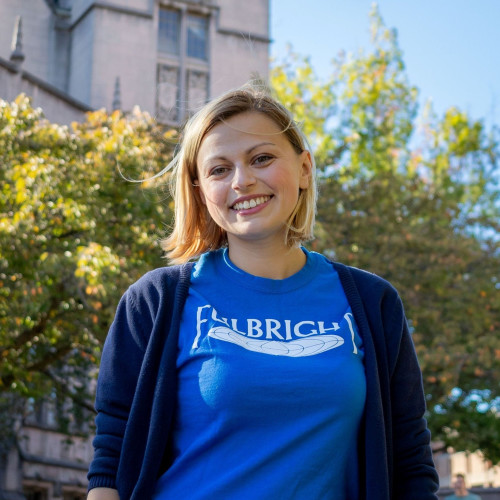
"LCC provides a true liberal arts education that equips its graduates to work and study anywhere in the world… It was an honor to join a small but distinguished cohort of students and professors pursuing academic excellence."

a photo of person or place for the testimony

Lidiya Oryshchuk
Country of Origin: Ukraine
MA Graduate, 2016

Alumni work at:

Graduate Certificate Program

Are you hesitant to make a two year commitment to a master’s degree? Take a small step now. Enroll in one class and learn what it feels like to be an online student in a master’s degree program.

LCC International Relations and Development department faculty

“Greetings from the Program Director”

As we welcome the incoming cohort and reconnect with current and former students, I want to express my sincere gratitude. Your work—in communities, NGOs, churches, governments, and international agencies—embodies the very spirit of this program. A great many things will continue to grow and change in the field of civil society leadership. But what remains constant is our commitment to you: to mentor, equip, and walk alongside you as you become reflective thinkers, capable practitioners, and ethical leaders. If you have questions about the program, I warmly invite you to reach out. I look forward to learning your stories and supporting you in your journey.

a photo of person or place for the testimony

Andy Williams, PhD
Director, MA in International Institutions and NGO Leadership
Director, Institute for Philanthropy and Civil Society
Co-Editor, Philanthropia

Campus Experience

As part of your program, you will have 10 day Summer Residency Session on LCC campus. It's a great chance to meet faculty and fellow students and form relationships with growing professionals in the field.

Access to On-site Facilities:
  • Gym
  • Cafeteria
  • Library
  • Study & Work Zones
  • Laundry Rooms
Convenient Location

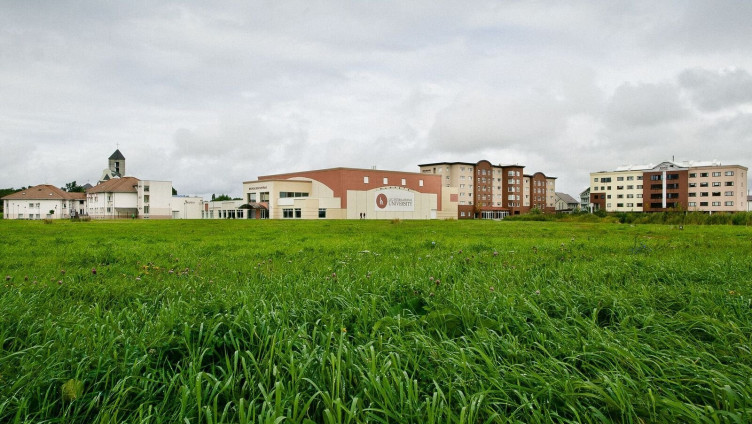
Campus is located within walking distance of the heart of old town and the Baltic Sea. It is conveniently connected by public transport network so you will have no trouble getting around. 

View campus map >

Living in Residence Halls

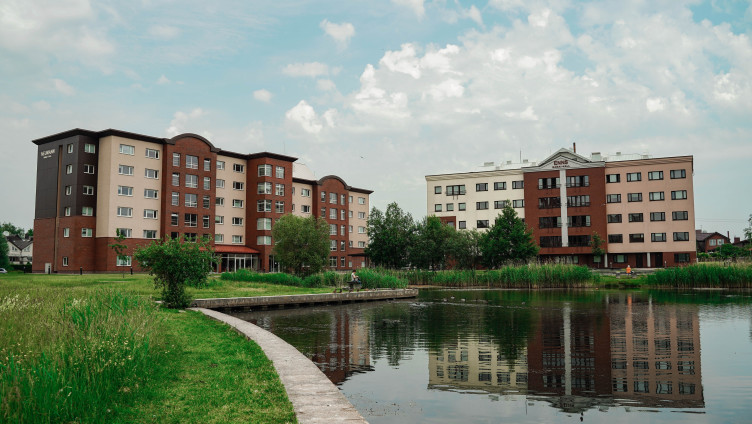
LCC has two modern residence halls on campus, Neumann Hall and Enns Hall. Both Halls are within 2-minute walk from the academic building, gymnasium, and cafeteria.

Rooms

Each room in the residence hall is designed as a suite; each room has a small common area with two sinks and a refrigerator, a bathroom, and two separate bedrooms. Each bedroom has several beds, desks, and closet space. Each floor has a kitchen/ lounge, where students can cook and eat.

You Will Also Have Access to:
  • Study rooms
  • Computer lab
  • Chapel/prayer room 
Read more about housing >

Admission Requirements

To Apply You Need:
  • Bachelor's degree - official transcripts and copy of diploma from an accredited university. 
  • Two letters of recommendation - recommendations must come from people familiar with the applicant’s character, academic and professional background. Preferably, at least one of the recommendations should come from a university the applicant graduated from.
  • English language certificate - please see details in the chart on the right.
  • Motivational letter - statement of purpose indicating why this program is appropriate for your academic interests and professional goals.
Academic Calendar
ENGLISH CERTIFICATE
MIN. SCORE
TOEFL® iBT 100
IELTS ACADEMIC 7.0
You don’t need a certificate if:
  • You are an LCC alumni
  • You are a citizen of Great Britain, Ireland, Australia, Canada, the U.S. or New Zealand
  • You attended a university for at least two years in any of the above-mentioned countries

Application Process

The program starts in August of each year. Applicants should send their documents and complete applications by mid-May.  

Note: Applicants with degrees from non-Lithuanian universities have to send their transcripts to go through the diploma accreditation process with the Ministry of Education. The Admissions team can help you verify your certificate. Please send us an official translation into English or Lithuanian.  

Submit Online Application

Register and start your application at https://admissions.lcc.lt  (150 EUR application fee)

Early application deadline: February 15

Late application deadline: May 15 

Send Evidence to Support Application

Attach to your online application all of the required documents described in the Admission Requirements section above.


*Your academic qualification documents will be subject for the Qualification Recognition process if they were obtained outside Lithuania. Country specific requirements may be applicable depending which country you are from.  Please contact us directly for the details at admission@lcc.lt.  

Attend an Online Interview

After reviewing your application and the submitted documents, we will schedule an interview. If you live nearby or would like to visit LCC we can schedule a live interview. Otherwise, an online video call will be sufficient.


The semi-structured interview is designed not to test the applicant's academic knowledge, but rather to provide the Admissions office with a better understanding of the applicant as an individual and their motivation for studying at LCC. Applicants should be ready to discuss their background, school and professional  experiences in detail. Additionally, we encourage applicants to ask any questions they may have for the Admissions Committee and the Program Director during the interview.  

Get Results Within Two Weeks

We process applications throughout the year and return results within two weeks after you have submitted your application, documents and completed an interview.

Tuition & Fees

Tuition for the full academic program (two academic years) is 6,000 EUR.

Tuition for the full program (two academic years) for LCC alumni is 5,500 EUR  

In addition, students are responsible to pay for their own textbooks, Summer residency housing,  and travel to Lithuania.

Read about payments rules & schedule >

Financial Aid Options

Education Exchanges Support Foundation is opening a Call for applications for 100 Lithuanian state scholarships for full-time Master’s degree or integrated studies (a part which is equal to Master’s degree studies) at Lithuanian higher education institutions for the year 2022. Funding under the Call will be provided to the citizens of Armenia, Azerbaijan, Belarus, China, Georgia, Israel, Japan, South Korea, Moldova, Ukraine and foreigners of Lithuanian origin from non-EU and EFTA countries::

• A monthly scholarship and a grant covering the study cost is offered to citizens of:

Ukraine (60 grants);
Belarus (20 grants);
Armenia, Azerbaijan, Georgia, foreign citizens of Lithuanian origin, Moldova, (15 grants altogether);  

• A monthly scholarship is offered to citizens of China, Israel, Japan, South Korea (5 grants altogether).  

A monthly scholarship is equal to 420 EUR. The grant covering the study cost is limited to and cannot be higher than the national standard study cost.  

Funding is offered to a limited amount of students. Read more on government page.

The Lithuanian government distributes over 10 million EUR in student loans annually. For more information on government student loans visit www.vsf.lt or contact us at sfs@lcc.lt.

Are you an employed professional who is looking for new knowledge and skills to grow? 

Good companies are willing to invest into their employees. Talk with your management to discover if they are willing to provide such an opportunity for you. Contact our admissions team at study@lcc.lt if you require any additional information or help.    

According to Lithuanian law, amounts paid for studies (when higher education and/or qualification is obtained upon graduation, as well as doctoral studies and art post-graduate studies) by residents of Lithuania can be deducted from the taxable income and thus decrease the income tax for residents. If a person whose studies are being paid for is under 26 years of age and tuition cannot be deducted from his/her taxable income, the tuition can be deducted from the taxable income of one of his/her parents/foster parents. If a loan is taken to pay for studies, the amounts that can be deducted are the amounts repaid. The tuition is to be deducted in the annual income declaration.

The highest net benefit of this deduction is income tax savings amounting to 15% of tuition. For more information on Income tax benefit visit www.vmi.lt.

Have a question?

By using this form you agree that LCC will use your email address and name only to respond to your inquiry. Do not use the form below to submit confidential or sensitive information. Learn more about our data protection and your rights.