LCC International University > Research at LCC > Project – Networking and Training Opportunities for More Humane Prisons

Project – Networking and Training Opportunities for More Humane Prisons

This 8 month project built regional partnerships between organizations working with incarcerated youth in Lithuania, Latvia, and Sweden. By integrating study visits, job shadowing and training programs, we strengthened trauma-informed practices and mediative communication strategies within incarceration facilities. By integrating the Dialogue for Peaceful Change (DPC) methodology (https://www.dpcglobal.org/) and Addressing the Impact and Trauma of Incarceration (AITI) (hdpi.org ) and Strategies for Trauma Awareness and Resilience (STAR) , the project equips professionals with skills to address and transform conflicts within prison systems,contributing to a more humane and rehabilitative environment. Our peace center was involved in facilitating 3 key trainings to equip professionals with conflict navigation , mediative, trauma-informed, understanding of the incarceration process impacts,  and worker resilience  skills. Ultimately this project worked at growing sustainable prison rehabilitation work and social justice values. 


Project Dates: August 2025 – March 2026

From August 2025 to March 2026, The Center for Dialogue and Conflict Transformation(CDCT) at LCC International University partnered with organizations from Latvia, Lithuania and Sweden on an 8-month Nordic Council of Ministers’ funded project. We came together to explore ways to advance humane prisons. This mobility initiative advanced our understanding and strengthened practices to advance rehabilitation, dialogue skills, and trauma-informed practices to support inmates, volunteers, and staff.  It evolved from more than cross-border visits into shared understanding on ways to reshape approaches to incarceration and ongoing collaboration.


Project Timeline and Activities

The project featured exchanges across 3 locations, blending NGO site visits while exchanging real-life practices of respective countries (Latvia, Lithuania and Sweden) along with visits to different prison systems and building skills through workshops and reflections.


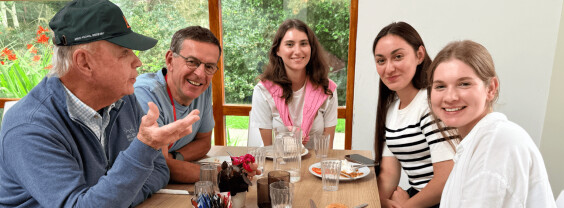
The journey began in Liepāja hosted by  Radi Vidi Pats— not only in NGO meetings but with the prison and probation systems. Walking through Liepāja Prison, resocialization staff  shared  what life inside looks like beyond statistics. The tour of the Probation Agency held discussions on second chances- highlighting volunteer mediation and resocialization support as reintegration support systems to help people return to society. A standout poetry writing workshop with inmates demonstrated ways to transform pain into meaning, art through words became a way of rehumanization while naming key needs and concerns-  dissolving barriers between visitors and incarcerated individuals as stories were shared.  Naomi Enns from LCC called it invaluable; “It gave new insight and skill in ways to build trust…ending with clowning skills to remind inmates of their ability to laugh and play even in dark spaces”. This activity modeled healing encounters through creative expression- grounding the project in real experiences by both volunteer conversations and practices that help build layers of trust. 

Read full story >


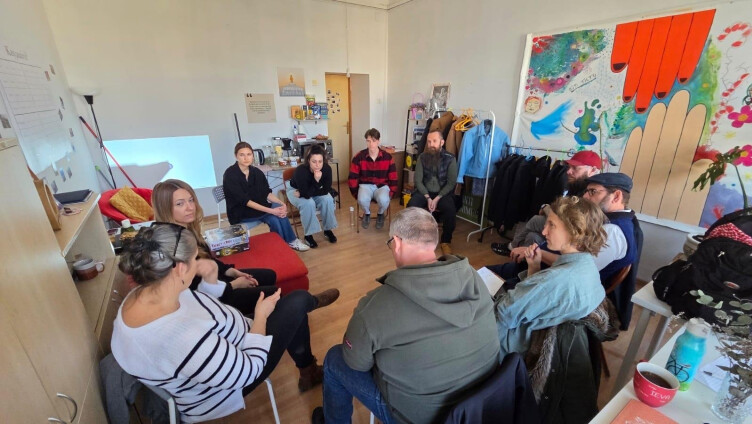
In Klaipėda, the focus shifted from observing → to doing. The Center for Dialogue and Conflict Transformation at LCC International University hosted and led both the  DPC-Global training of trainers and training of facilitators which equipped participants to facilitate dialogue in conflict contexts and prison system settings. They practiced conflict mapping to identify destructive cycles and alternative paths for staff support.  Participants stepped into the role of training facilitators. They practiced how to guide difficult conversations, understand conflict, and create space where people feel heard. This wasn’t just theory — it was about learning how to show up in complex, emotional environments and respond with skill and care.  Key tools included empathic communication for emotional conflict environments. Within the training, exploring conflict mapping and the pillars that keep destructive conflict going helped to identify key issues within prison systems and ways to identify alternative paths to support staff. This stage of the project strengthened participants’ ability to apply dialogue and apply empathic mediative communication in real-life settings.

Read full story>

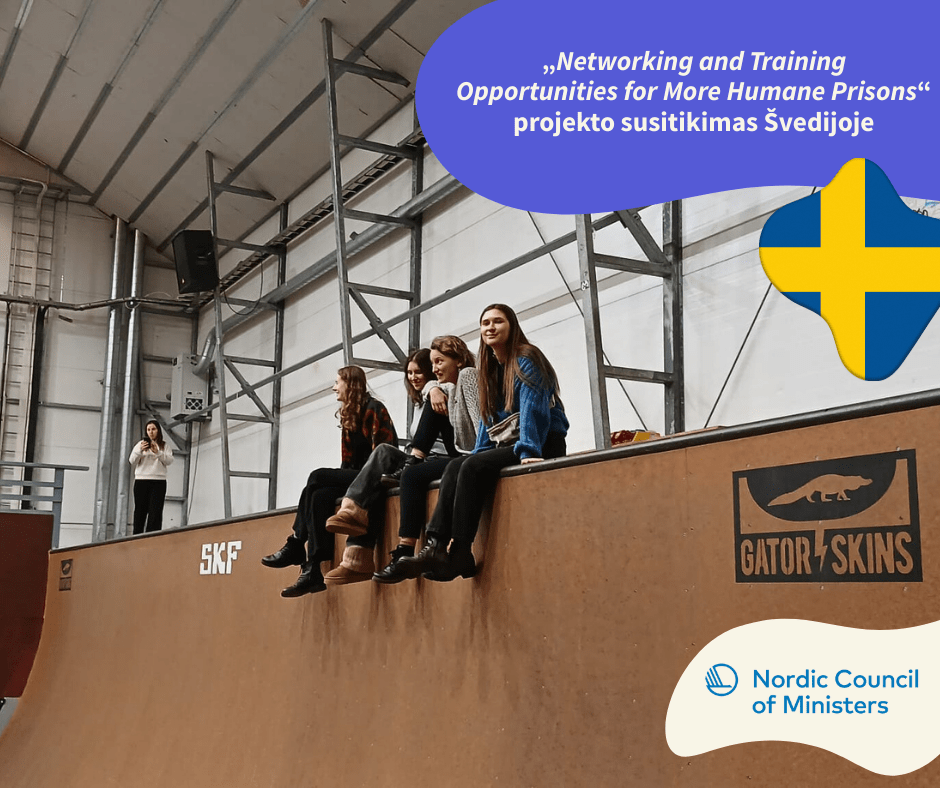
Visits to Fryshuset, a youth community NGO involved in prison support services and probation offices showcased reintegration models amid challenges like epidemic gang crime. Conversations with various staff showed what rehabilitation can look like when systems are built on trust. Dialogues covered community involvement, early intervention, changing cultural realities, volunteer programs, and post incarceration buddy systems. One participant prized the first-day dialogue: "We talked about real-life experiences and how people support inmates, which made everything feel very real and meaningful." Observations stressed volunteer recognition in healing strategies.  Seeing these models in practice sparked important reflections: What works? What can be adapted? What needs to change? The need for more engagement between community workers and inmates at every level of incarceration was noted as well as the difficulties within the system for long-term guidance by experts.  A helpful trip to one of Sweden’s probation offices allowed us to see the intricate weaving of programs by the state with social services towards rehabilitation and strong approaches towards a positive work culture. Fryshuset’s community volunteer organization network visit provided a glimpse of circle way connections- bridging from inside prison to outside inmate support groups.  This exchange broadened perspectives and deepened the shared understanding of effective rehabilitation practices. This visit reinforced learning that there is a need for recognition and ‘to be seen’ as part of inmate healing strategies for authentic desires for change in seeking new behavioral alternatives to grow. 

Read full story> 


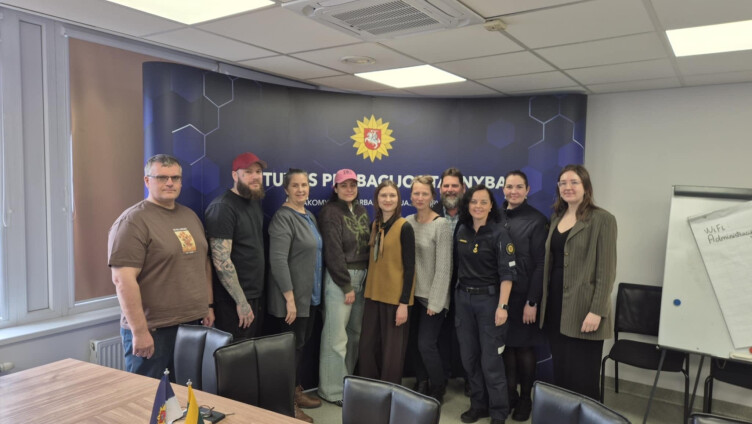
The final exchange in Vilnius was a moment to pause, reflect, and connect with everything we had learned. Hosted by Prirašytos Rankos, the  program focused on the Lithuanian context while also looking forward — asking how these insights can be carried into future work. Activities spanned prison museum visits (KGB and Lukiskes), a probation office tour, and CDCT ran a key workshop "Witnessing without Wounding: Impact of Trauma and Incarceration – Resilience for All."  Participants explored something often left unspoken — the emotional weight of working in prison environments.  They explored vicarious trauma using resources like Addressing the Impact of Trauma of Incarceration (AITI at hdpi.org) and Strategies for Trauma Awareness and Resilience (STAR). Participants addressed psychosocial impacts, breaking violence cycles, and caregiver self-care.  Alongside this, discussions and creative sessions connected theory with real-life experiences, helping participants better understand both systems and the people within them. A visit to probation services was a highlight , valued by all, Douglas Enns (a prison volunteer from LCC) noted: "Their intention and care... provided sparks of light, healing, and hope," noting Lithuania's 90% female probation staff. And a shorter training offered participants a deep dive into the life of inmates and the challenges of reintegration by Prirašytos Rankos that allowed us to reflect collaboratively on actions that would help to make our communities safer and strengthen healing when crime has occurred.  


Key Learnings

  • Rehabilitation is not just about programs — it’s about people and relationships; volunteer-inmate connections are essential for dignity, empathy skills and change.
  • Dialogue is powerful- it creates space for real change to become possible; building trust via creative exercises , and moving through mapping of conflicts from punitive to restorative justice approaches for sustainable community peace is critical.
  • Trauma Needs- Supporting others requires also knowing how to take care of yourself, there is need for caregiver trainings to prevent burnout across systems.
  • Countries face unique realities but shared challenges.
  • System-wide efforts- especially resocialization programs and volunteer connections inside prisons- are essential
Personal Reflections

Participants described the experience as eye-opening, deepening understanding of prison and probation systems while building empathy. Testimonies emphasized resilience in emotionally demanding work and reinforced a key insight: while incarceration has lasting impacts, resilience creates space for change.

Challenges noted

Participants encountered systemic challenges, including gaps between rehabilitation goals and punitive realities, as well as rising burnout risks among staff and volunteers. Historical and social contexts, particularly in Lithuania, added complexity to perceptions of justice and reintegration. These challenges underscored the need for ongoing trauma-informed training and stronger support systems.

Future Applications and Collaborations

Project learnings will be integrated into LCC’s teaching, training programs, and future justice-related initiatives. There is strong potential to expand volunteer programs and develop further support for resilience among both staff and inmates. Continued collaboration aims to strengthen social justice efforts and promote healthier, more restorative communities.

Conclusions

The project built lasting partnerships and strengthened skills across organizations working toward more humane prison systems. By prioritizing dialogue, relationships, and resilience, it demonstrated how collaborative learning can drive meaningful change. Although the project has ended, its impact continues through ongoing partnerships, practices, and shared knowledge.

Our Sponsor

This publication has been produced with the financial support from the Nordic Council of Ministers. The content of this publication is the sole responsibility of the coordinators of this project and does not necessarily reflect the views or policies of the Nordic Council of Ministers.  #NBNGOprogram

Read Online Report>

our News and Events

A photo for this news article
Peace Encounters: State of the World

2026-04-16

On April 8th, we gathered in a listening circle. Sometimes, the world feels overwhelming — like everything is happening all at once, and there’s no space to process it.This Peace Encounter evening hosted by the Center for Dialogue and Conflict Transformation at LCC International University was that space.We gathered in a listening circle to slow down and be present with each other. No pressure to debate or have the “right” opinion — just an honest conversation about what’s happening in the world and how it affects us.We talked a lot about courage — what it means to stay engaged, to keep caring, and to not turn away from difficult realities. Everyone came with different experiences, but there was a shared feeling: the need to understand and to be heard.As Zoriana, a 2nd year Ukrainian business student, shared,“Peace encounters provide a rare opportunity in modern life to pause, reflect, and truly listen… Through discussions with others, we gain new insights and a deeper understanding.”And Salome, a 1st year IRD student from Georgia,  reflected on the feeling of the space itself:“It is always special to come together and create a safe space where all ideas and perspectives are respected and appreciated.”That’s what made this encounter meaningful — not just the topics we discussed, but how we showed up for each other.Because sometimes, peace doesn’t start with big solutions.Sometimes it starts with a conversation — honest, open, and human

A photo for this news article
Reflections on Creating Resilient Communities for Peace and Justice: Roles of Business and Civil Society

2026-03-20

From 25th of February to 1st of March, students, volunteers and scholars from around the world gathered at LCC International University with a common desire - facilitation of peace in the world.  Hosted by the Center for Dialogue and Conflict Transformation, the peace conference “Creating Resilient Communities for Peace and Justice: Roles of Business and Civil Society” brought business owners, civil society researchers, faith communities, practitioners and NGOs together in exploring the importance of integrating cooperation across different backgrounds and exploring currently at times unimaginable paths to peace. They looked at ways for creating a mutual understanding regardless of social biases and differences. Thus, practices of building resilient communities happened as different fields brought ideas around prosperity and mutual cooperation into a learning dialogue. A preconference panel with Dorothy Nyambi from Mennonite Economic Development Associates (MEDA) set the stage for further understanding through “The Case for the Nexus: Economic Prosperity and Peace.” This opened a larger discussion on the relationship between economic development and sustainable peace, how systems fracture and create vulnerability which provided new ideas from which the conference began.  Virginija Poškutė, from ISM University of Management and Economics in Vilnius and our second keynote speaker emphasized ethical concerns and challenged us with the question “who is thinking about social responsibility?” and how business plays a role in society’s wellbeing.  Over four days, participants engaged in plenary sessions with speakers, workshops, discussions, and interactive activities. These addressed the roles of business and civil society as essential to resilience in communities affected by conflict. Speakers and facilitators came from countries  across the globe including Canada, South Korea, Ukraine, Lithuania, Germany, Croatia, Ethiopia, the United States, and beyond sharing their experiences and insights on ways towards transformation covering topics like culture and memory, social cohesion and community care, faith, civil society engagement, education, youth empowerment, and governance. One of the unique elements of the conference was the storytelling theatre led by Raffi Feghali, where participants had the opportunity to reflect on personal experiences and share their stories about resilience, faith, hope, and community. These transforming moments created space for deeper connection and dialogue among attendees. Our LCC student volunteers played a crucial role in the success of the conference. Many described the experience as both meaningful and inspiring. For International Relations and Development students such as AnnaRomanenko (a 3rd year student at LCC) shared that meeting people from different fields working toward peace gave her hope and motivation, especially during difficult global times. Uliana Horbenko,also a 3rd year student,noted that the conference expanded her understanding of peacebuilding and connected her with scholars, artists, pastors, and activists united by a shared goal. Salome Noniashvili, a first-year student, noted: “It was particularly interesting to connect business to peace and explore how they can complement each other”.   Yan Levyskyi , a 2nd year student said “The peace conference helped me shift my focus to building peace and being a peacemaker through various workshops and lectures given by educated individuals from diverse cultural backgrounds” He continued to identify “ how peace plays a vital role in todays wounded and broken world.”  Throughout the conference, participants emphasized the importance of dialogue, cooperation, and resilience. The bringing together of individuals from diverse cultural experiences and professions was a positive element. As one speaker, Dr. Elena Šiaudvytienė comments, “during the conference meeting people from many parts of the world who are working to build a more peaceful and just world truly strengthened my hope”.  Overall, the conference not only created a space for exchange of ideas and initiatives; it also developed common ground for future cooperation, leading participants in a journey into a relational web.  By remembering our common humanity and interdependency, it strengthened courage to dare hold out hope in difficult times while rethinking strategically the approaches and actions used to create resilience in communities.  As the conference concluded with reflections and farewells, one message stands out to all of us who participated stood out clearly: building resilient communities requires collective effort, open dialogue, and a willingness to engage across differences.  By Andrii Huk (peace intern) We are thankful to the support of Mennonite Mission Network (MMN) and Horsch Foundation for their continued partnership support of our peace work