LCC International University > Research at LCC > Project – STAR Trauma Healing Training for War-Affected Communities in Klaipėda

Project – STAR Trauma Healing Training for War-Affected Communities in Klaipėda

Project Overview

The Center for Dialogue and Conflict Transformation (CDCT) at LCC International University implemented a grant-funded initiative, supported by PC(USA), it focused on trauma awareness, resilience-building, and community healing among war-affected and migrant populations in Klaipėda, Lithuania. The project delivered a 2½-day trauma healing training course (November 14–16, 2025) based on evidence-based resources from the Strategies for Trauma Awareness and Resilience (STAR) and Addressing the Impact and Trauma of Migration (AITM at hdpi.org) programs. Responding to Lithuania’s refugee influx of over 53,000 individuals, the training brought together 19 participants—including students, practitioners, and community members from diverse national backgrounds—to create a space for connection, learning, and transformation, while strengthening trauma awareness, resilience, and culturally sensitive approaches to community integration.

The 3-Day Journey: From Safety to Action

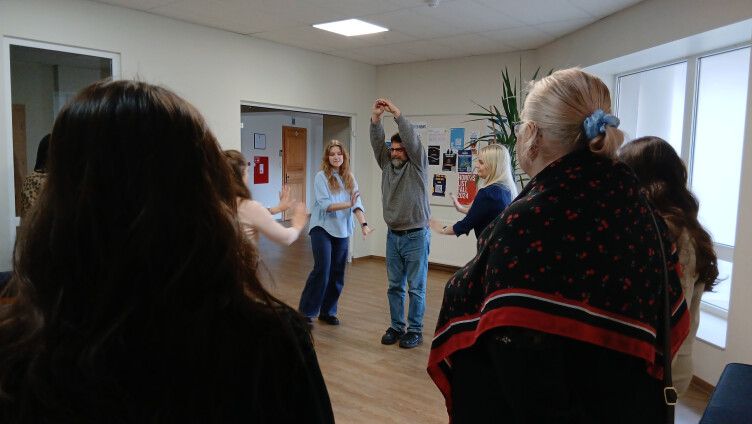
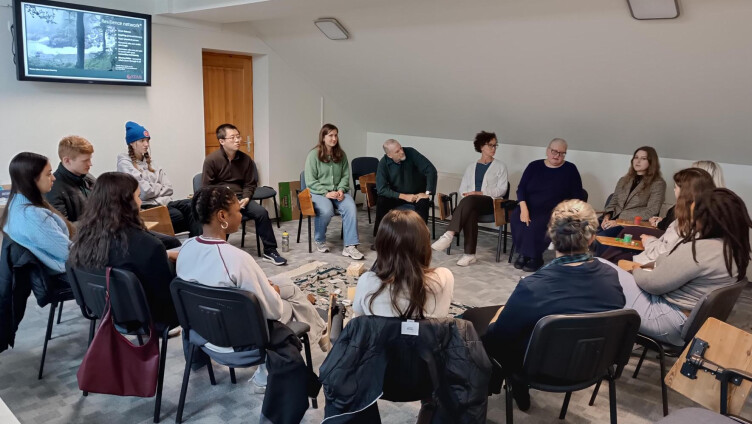
Responding to the ongoing realities of displacement and migration in Lithuania—home to tens of thousands of refugees, including a significant Ukrainian population—the training created a structured, human-centered space to explore trauma, identity, and belonging. Led by accredited facilitators Naomi Enns and Anna Dovbyk, it used non-formal and experiential methods to support both cognitive understanding and relational and, somatic processing of trauma. The program combined neuroscience-informed frameworks with listening circles, emphasizing personal healing alongside community transformation.

Day 1: Building Safety & Resilience

Focused on creating group agreements, support mapping, life story sharing , and identifying “Symbols of Resilience and Hope” through embodied exercises.

Day 2: Trauma Awareness

Explored the stress/trauma journey, “Rivers of Life”, cycles of unaddressed trauma via the STAR Model, and physical grounding techniques for body awareness

Day 3: Healing & Hope

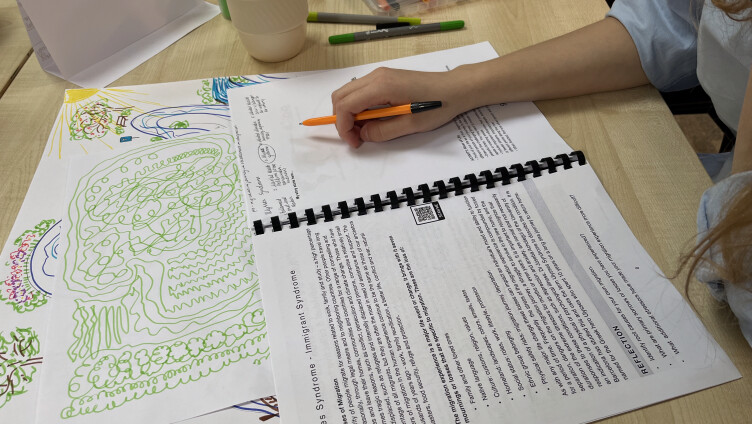
Addressed the "Ulysses Syndrome" of migration via the Snail Model, developed "Healing-Centered Action" plans, and utilized various exercises along with the Tree of Life to map future resilience.

Key Tools & Resources

Each participant received a context-appropriate manual designed by the facilitators which drew from AITM and STAR resources. This resource included:

  • Trauma-releasing exercises and psychological first aid.
  • Body, mind, and spirit regulation tools and reflection prompts.
  • The Trauma Journey and Cycles of Conflict along with elements specific to migration.
  • Methodologies for compassionate listening and peacebuilding circles to foster safe environments for transformation.

Transformative Impacts & Breakthroughs

"Creating these spaces where participants can process such a difficult topic empowers them, bringing strength and transformation — with the potential to impact the circles around them and the wider campus community." Anna Dovbyk, Facilitator


Personal Breakthroughs

“Empowering and insightful.”


Broadened Perspectives

“This kind of training is important for building awareness and compassion in our community”


Professional Growth

"I learned practical ways to support resilience... strengthening my confidence for future work"

Sustainability & Future Outreach


  • Self-Care Plans: Participants committed to ongoing personal and community-based practices.
  • “Nurturing Hope” Hub: Four participants continue with monthly mentoring to support resilience in conflict-affected communities.
  • Long-term Integration: Trauma-informed approaches are being embedded into LCC courses, counseling, and dialogue programs.
Closing affirmation

This ongoing work reflects CDCT’s commitment to sustainable impact—equipping local leaders to carry trauma-informed practices into their communities. “Resilience is our song. Together, we rise, rebuild, and reconnect.

Our news and events

A photo for this news article
Peace Encounters: State of the World

2026-04-16

On April 8th, we gathered in a listening circle. Sometimes, the world feels overwhelming — like everything is happening all at once, and there’s no space to process it.This Peace Encounter evening hosted by the Center for Dialogue and Conflict Transformation at LCC International University was that space.We gathered in a listening circle to slow down and be present with each other. No pressure to debate or have the “right” opinion — just an honest conversation about what’s happening in the world and how it affects us.We talked a lot about courage — what it means to stay engaged, to keep caring, and to not turn away from difficult realities. Everyone came with different experiences, but there was a shared feeling: the need to understand and to be heard.As Zoriana, a 2nd year Ukrainian business student, shared,“Peace encounters provide a rare opportunity in modern life to pause, reflect, and truly listen… Through discussions with others, we gain new insights and a deeper understanding.”And Salome, a 1st year IRD student from Georgia,  reflected on the feeling of the space itself:“It is always special to come together and create a safe space where all ideas and perspectives are respected and appreciated.”That’s what made this encounter meaningful — not just the topics we discussed, but how we showed up for each other.Because sometimes, peace doesn’t start with big solutions.Sometimes it starts with a conversation — honest, open, and human

A photo for this news article
Reflections on Creating Resilient Communities for Peace and Justice: Roles of Business and Civil Society

2026-03-20

From 25th of February to 1st of March, students, volunteers and scholars from around the world gathered at LCC International University with a common desire - facilitation of peace in the world.  Hosted by the Center for Dialogue and Conflict Transformation, the peace conference “Creating Resilient Communities for Peace and Justice: Roles of Business and Civil Society” brought business owners, civil society researchers, faith communities, practitioners and NGOs together in exploring the importance of integrating cooperation across different backgrounds and exploring currently at times unimaginable paths to peace. They looked at ways for creating a mutual understanding regardless of social biases and differences. Thus, practices of building resilient communities happened as different fields brought ideas around prosperity and mutual cooperation into a learning dialogue. A preconference panel with Dorothy Nyambi from Mennonite Economic Development Associates (MEDA) set the stage for further understanding through “The Case for the Nexus: Economic Prosperity and Peace.” This opened a larger discussion on the relationship between economic development and sustainable peace, how systems fracture and create vulnerability which provided new ideas from which the conference began.  Virginija Poškutė, from ISM University of Management and Economics in Vilnius and our second keynote speaker emphasized ethical concerns and challenged us with the question “who is thinking about social responsibility?” and how business plays a role in society’s wellbeing.  Over four days, participants engaged in plenary sessions with speakers, workshops, discussions, and interactive activities. These addressed the roles of business and civil society as essential to resilience in communities affected by conflict. Speakers and facilitators came from countries  across the globe including Canada, South Korea, Ukraine, Lithuania, Germany, Croatia, Ethiopia, the United States, and beyond sharing their experiences and insights on ways towards transformation covering topics like culture and memory, social cohesion and community care, faith, civil society engagement, education, youth empowerment, and governance. One of the unique elements of the conference was the storytelling theatre led by Raffi Feghali, where participants had the opportunity to reflect on personal experiences and share their stories about resilience, faith, hope, and community. These transforming moments created space for deeper connection and dialogue among attendees. Our LCC student volunteers played a crucial role in the success of the conference. Many described the experience as both meaningful and inspiring. For International Relations and Development students such as AnnaRomanenko (a 3rd year student at LCC) shared that meeting people from different fields working toward peace gave her hope and motivation, especially during difficult global times. Uliana Horbenko,also a 3rd year student,noted that the conference expanded her understanding of peacebuilding and connected her with scholars, artists, pastors, and activists united by a shared goal. Salome Noniashvili, a first-year student, noted: “It was particularly interesting to connect business to peace and explore how they can complement each other”.   Yan Levyskyi , a 2nd year student said “The peace conference helped me shift my focus to building peace and being a peacemaker through various workshops and lectures given by educated individuals from diverse cultural backgrounds” He continued to identify “ how peace plays a vital role in todays wounded and broken world.”  Throughout the conference, participants emphasized the importance of dialogue, cooperation, and resilience. The bringing together of individuals from diverse cultural experiences and professions was a positive element. As one speaker, Dr. Elena Šiaudvytienė comments, “during the conference meeting people from many parts of the world who are working to build a more peaceful and just world truly strengthened my hope”.  Overall, the conference not only created a space for exchange of ideas and initiatives; it also developed common ground for future cooperation, leading participants in a journey into a relational web.  By remembering our common humanity and interdependency, it strengthened courage to dare hold out hope in difficult times while rethinking strategically the approaches and actions used to create resilience in communities.  As the conference concluded with reflections and farewells, one message stands out to all of us who participated stood out clearly: building resilient communities requires collective effort, open dialogue, and a willingness to engage across differences.  By Andrii Huk (peace intern) We are thankful to the support of Mennonite Mission Network (MMN) and Horsch Foundation for their continued partnership support of our peace work