LCC International University > News and Events > Historical Identities: Teaching for Peace in Post-Conflict Bosnia and Herzegovina
2025-11-27
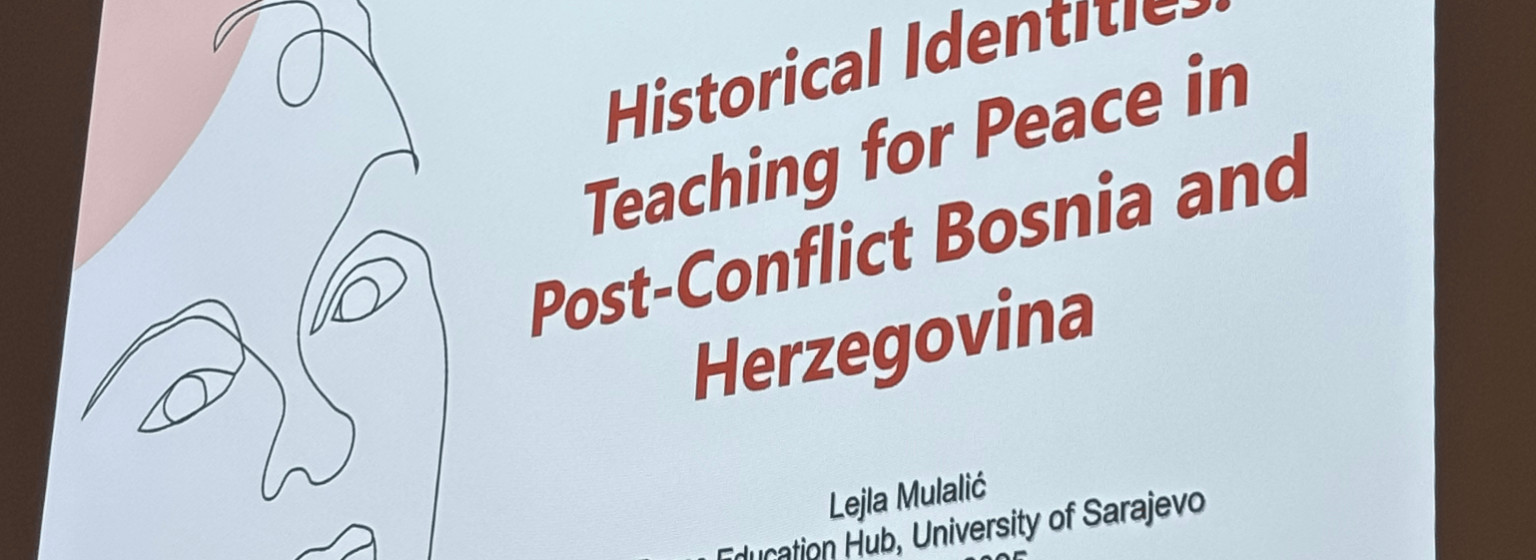
The peace center for Dialogue and Conflict Transformation hosted Lejla Mulalic from Sarajevo University as a speaker in our Historical Identities series on November 26th. She spoke on the teaching of peace in post-conflict Bosnia and Herzegovina; she emphasized that individuals and educational institutions can foster healing in survivors and reconciliation in post-conflict societies. In highlighting the role of education, literature, and art in the transformation of conflicts and post-war recovery, she showed how lived experiences can become a factor for bringing positive change in shaping more peaceful societies.
It was a time to reflect on War, Ientities, and Memories. Lejla's story as a war survivor and her exploration of the devastation of the war, genocide, displacement, and survival struggles in Bosnia-Herzegovina—adds important human stories to the abstract concept of the conflict and recovery. Lejla shared many emotional stories and images from wartime, one of which was people carrying water in harsh winter; another was the destruction of simple services and infrastructure showing not only direct suffering of people but also a long-lasting division in the society of Bosnia and Herzegovina. A society in which their education and political systems along with other aspects were divided. In her experience, such differences and opposing stories where it was difficult to find common narratives made the situation unstable and made the peace-building process harder.
A time exploring Art and literature in peacebuilding. Lejla emphasized the role of literature, poetry, and history in the peacebuilding process and identified its place in building the resilience of people through the ways it helps with complexity and co-construction of meaning, especially during abnormal times. as. It helps people remember history and express emotions. In her talk, she used poems to understand and share her trauma and to recover from past experiences. This approach resonates with theories of conflict transformation and peacebuilding which advocate the arts are safe spaces for reflecting past traumatic events and recovering from such experiences using art and poems. Participating in cultural and artistic activities can be seen as a way to overcome past traumatic events and find a peaceful way to bring peace to society. As one quote she used by a journalist in her city suggests “Trauma results in silence. Healing comes from speech, conversations and writing finally” (Arsenijevic, 2025)
A time to hear how Education plays a crucial role in fostering peacebuilding.
Lejla placed significant emphasis on the role of education in bringing peace to post-conflict societies. Her involvement with the Peace Education Hub at the University of Sarajevo involves the importance of developing a peace-building culture in schools and universities through formal curricula to bring long-lasting social peace. Asking us, how we might challenge key concepts? She discussed the complexity of identity “where history meets life” The linkage between education and overcoming the post-conflict divisions in societies is important through teaching history, literature, and even subjects like biology and others. Thus, education will help to break the cycle of violence and divisions while promoting peacebuilding and reconciliation. She noted how both students and teachers benefit from a peacebuilding learning approach that enables them to work together for non-violence in their societies.
A time to reflect on Personal growth and teaching
Lejla expressed gratitude for being invited by the peace center to share her story with LCC International University’s learning community and share her interest in building peace and prosperity through teaching. Her presentation demonstrated the importance of fostering inclusive communities in schools and other learning spaces. Lejla’s ability to transform her trauma into a “pedagogy of peace” is celebrated by Marleen Wall, LCC International University president, who noted, “Lejla is a brilliant presenter who shows how a person can transfer trauma of war and use it in pedagogy of peace.” Personal healing and public education are strongly interconnected approaches that are significantly important for post-conflict societies.
This event brought the LCC community together, with gratefulness and respect for Lejla's story. A story highlighting a pedagogy of peace. Her multifaced expertise in literature, poems, history, shaped by a lived reality of war, places her as an agent of peaceful change in her post-conflict yet fragile society. Through sharing personal stories woven together with art and strategies for education, she contributed an understanding on the construction of a more peaceful future. She offered us an approach in which experiences related to trauma can create healing and the needed reconnecting together for all individuals with their society.
Search LCC
Press ESC key to exit